Victron BMV-712, Renogy, and shunt-based monitors with Bluetooth. Know exactly how much power you've got left. Basic installs from $95 across Martin County.
Most RVs come with a simple voltage gauge or a three-light LED indicator on the battery panel. Those are basically useless. Voltage changes based on whether you're charging, discharging, or the batteries have been sitting. A 12.4V reading might mean your batteries are at 60% or 80% depending on the circumstances. You're essentially guessing.
A proper shunt-based battery monitor counts every amp-hour flowing in and out of your battery bank. It tells you your exact state of charge as a percentage, how much current you're drawing right now, and how many hours of power you have left at your current usage. According to Victron Energy, the BMV-712 Smart tracks these metrics with 99.9% accuracy through a precision shunt.
We install shunt-based monitors from Victron, Renogy, and other brands. Most units now include Bluetooth so you can check battery status from your phone instead of walking to the display panel. Every installation includes proper shunt wiring, display mounting (if applicable), and calibration for your specific battery bank.
A battery monitor tells you exactly how much power you have left, not just a voltage guess. Basic shunt install $95-175, Victron BMV-712 $175-325, integrated system $250-450. Tracks state of charge, current draw, and time remaining with Bluetooth monitoring on your phone.
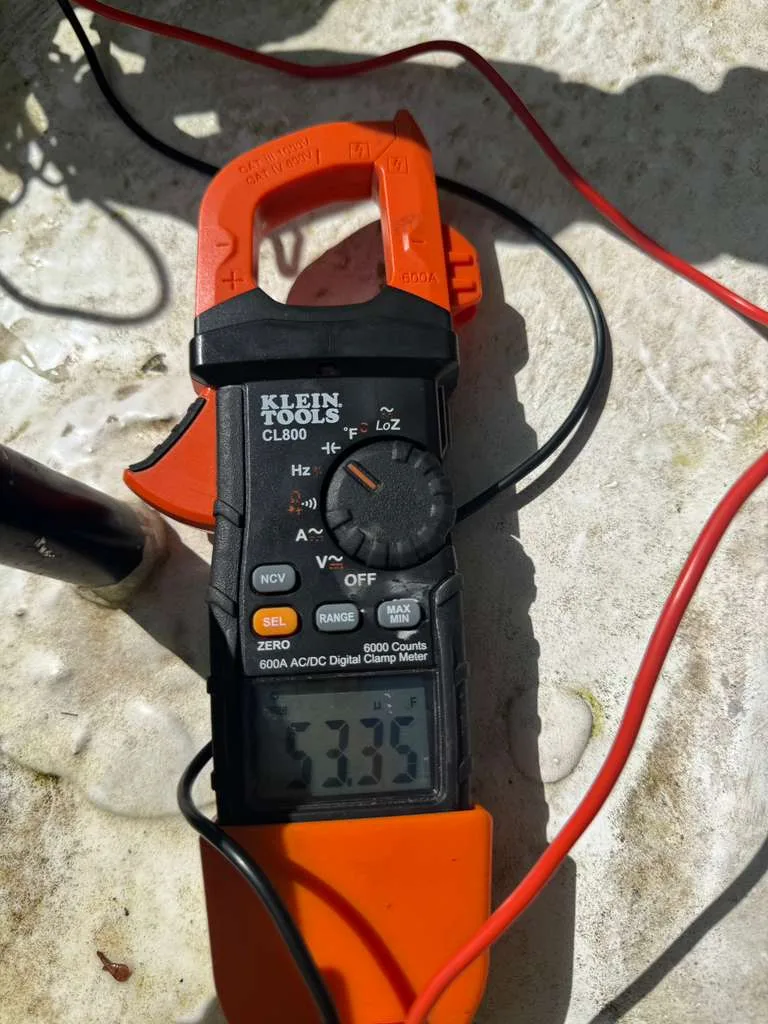
We install the precision shunt on the negative battery cable so every amp flowing in or out gets measured. All negative connections get rerouted through the shunt for accurate readings.
The monitor display gets mounted where you can easily see it, usually near the main control panel or battery bay. Bluetooth-only models skip this step since you use your phone.
Signal cables run from the shunt to the display. We also connect the positive sense wire directly to the battery bank for accurate voltage readings independent of the main cables.
We program your battery capacity, chemistry type, and charge voltage thresholds. Then we sync the monitor at full charge so the amp-hour counter starts from a known baseline.
| Service | Price Range |
|---|---|
| Basic Shunt Monitor Install | $95 - $175 |
| Victron BMV-712 Smart Install | $175 - $325 |
| Integrated System (multi-bank, temp sensor) | $250 - $450 |
| Monitor Recalibration / Troubleshooting | $65 - $95 |
| Bluetooth Module Add-on | $45 - $85 |
Includes monitor unit, shunt, wiring, and calibration. Final price depends on battery bank size and cable routing distance.
If you've ever been surprised by dead batteries, a monitor would have warned you hours in advance. Here's when it's time to install one:
A basic shunt-based monitor runs $95-175 installed. A Victron BMV-712 with Bluetooth costs $175-325, and an integrated system with temperature sensing and multiple battery banks runs $250-450. Price includes the monitor, shunt, wiring, and calibration.
A proper battery monitor shows you state of charge (percentage remaining), voltage, current flowing in and out, time remaining at current draw, and historical data like deepest discharge and total amp-hours consumed. It's like a fuel gauge for your batteries, except it's actually accurate unlike the basic voltage meters most RVs come with.
Voltage is a rough indicator but it's misleading. A battery reads different voltages depending on whether it's charging, discharging, or resting. A 12.4V reading could mean 60% charge at rest or nearly full under a charging load. A shunt-based monitor tracks actual amp-hours in and out, giving you a true picture of what's left. It's the difference between guessing and knowing.
For most solar-equipped RVs, absolutely. The BMV-712 includes built-in Bluetooth so you can check battery status from the VictronConnect app on your phone. It shows real-time current, voltage, state of charge, and time remaining. It also integrates with Victron charge controllers and inverters through VE.Smart networking, which lets the whole system share data for optimized charging.
The shunt goes on the negative battery cable, between the battery bank's negative terminal and the rest of the RV's electrical system. Every load and every charging source needs to pass through this shunt so the monitor can accurately count amp-hours. If anything bypasses the shunt, the readings will be wrong. We make sure all negative connections route through it.
Yes. Battery monitors work with any battery chemistry including flooded lead-acid, AGM, gel, and lithium. You just set the battery type in the monitor's configuration so it uses the correct voltage thresholds and Peukert exponent for accurate state of charge calculations. It's actually more important to have a monitor on lead-acid because you can't safely discharge them below 50%.
Most installations take 1-2 hours. The shunt wiring at the battery bank is the most involved part since we need to reroute the negative cable through the shunt. Running the display cable to wherever you want the screen mounted adds a bit of time depending on the distance. Bluetooth-only units are faster since there's no display to mount.
A battery monitor pays for itself by protecting your batteries from over-discharge. We'll install and calibrate it at your location.
Call 772-271-5270