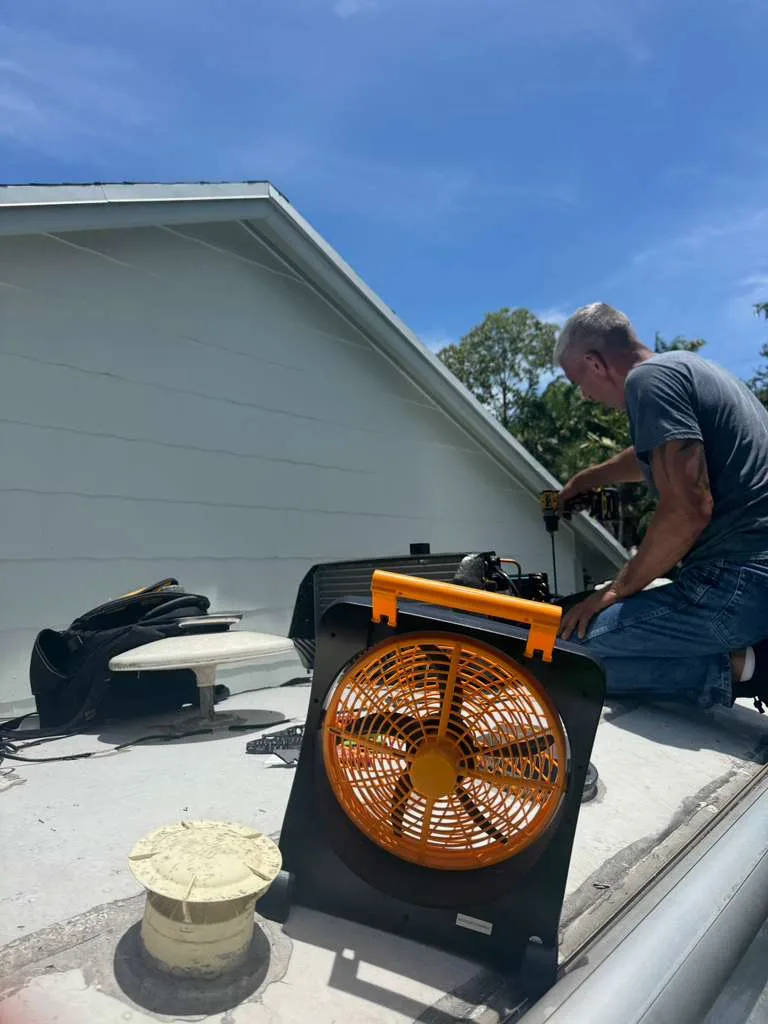
UV-baked, chalky, starting to crack. A fresh elastomeric coating restores your roof's protection and drops interior temps by 10-15 degrees. Partial recoats from $400, full coverage from $900.
Roof recoating applies a fresh protective layer over your existing RV roof membrane. Think of it as sunscreen for your roof, except this sunscreen also waterproofs, reflects heat, and adds years of service life to the material underneath. It's one of the smartest preventive investments you can make on an RV in Florida.
The coatings we use include Henry Tropi-Cool (specifically formulated for tropical and subtropical climates), Dicor EPDM rubber coating, and commercial-grade elastomeric products that stretch and flex with temperature changes. Each one is matched to your specific roof type. You can't put a rubber roof coating on fiberglass, or vice versa, without creating problems down the road.
In Palm City's climate, an uncoated or deteriorating roof surface absorbs enormous amounts of heat. According to the U.S. Department of Energy, reflective roof coatings can reduce surface temperatures by up to 50 degrees Fahrenheit. That translates directly to a cooler interior, less AC runtime, and lower energy costs whether you're on shore power or running a generator.
RV roof recoating applies a fresh protective layer that waterproofs, reflects UV, and extends roof life. Partial recoats run $400-800, full recoats cost $900-2,700, and premium coatings are $1,500-3,200. In Florida's sun and heat, recoating every 3-5 years prevents leaks and keeps interior temps manageable.
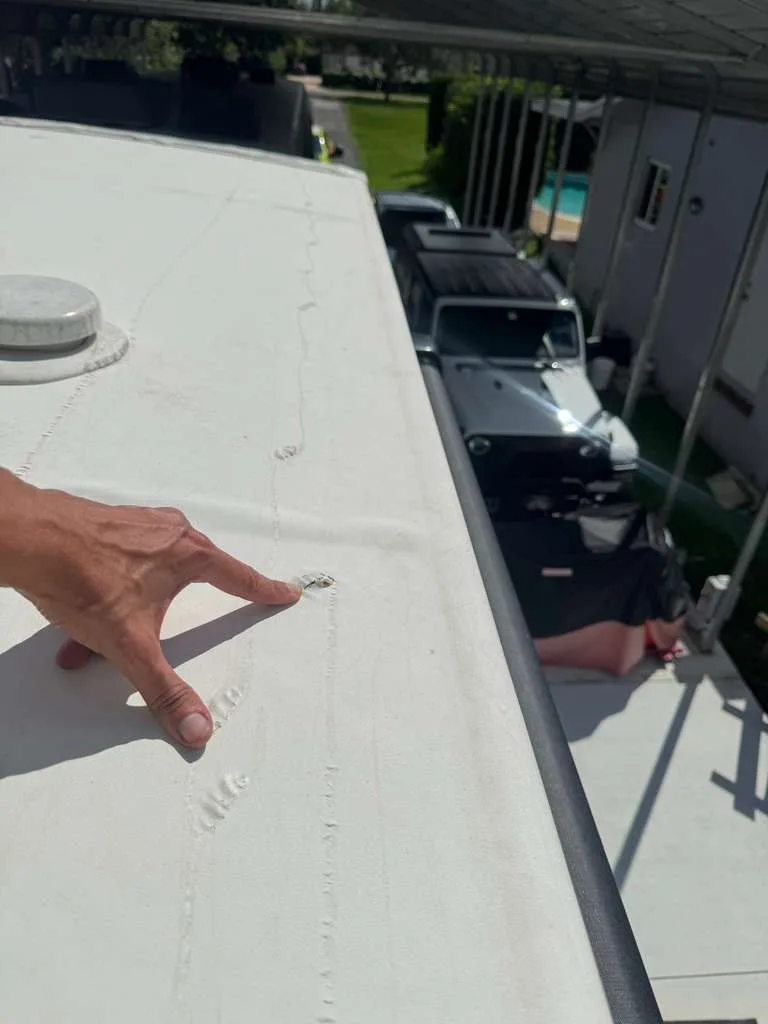
All dirt, mold, chalky residue, and debris get removed. The coating won't bond to a dirty surface. On rubber roofs, we use specialized membrane cleaner that won't damage the material.
Before any coating goes on, we fix all existing issues: cracked sealant, lifted seams, damaged areas around penetrations. Coating over a problem just hides it temporarily.
The coating is rolled or brushed on at the manufacturer's recommended thickness. Seams and high-stress areas get extra attention and reinforcement tape where needed.
After the first coat cures, we apply a second coat perpendicular to the first for complete, even coverage. Two coats provide the thickness needed for long-term protection.
| Service | Price Range |
|---|---|
| Partial Recoat (targeted areas only) | $400 - $800 |
| Full Roof Recoat (standard elastomeric) | $900 - $2,700 |
| Premium Coating (Tropi-Cool / extended warranty) | $1,500 - $3,200 |
Price varies by RV length, roof condition, and coating product selected. Firm quote provided after inspection.
Roof coatings break down gradually. Here's what tells you it's time for a fresh application:
A partial recoat covering problem areas runs $400-800. A full roof recoat costs $900-2,700 depending on the length of your rig and the coating product used. Premium coatings with extended warranties are $1,500-3,200. We'll measure your roof and give you a firm number before starting.
For Florida's heat and UV exposure, Henry Tropi-Cool is one of the best options. It's specifically designed for hot, humid climates and reflects a significant amount of solar heat. Dicor EPDM coating works well for rubber roofs. The right choice depends on your current roof material, so you don't want to just grab something off the shelf without knowing what's already up there.
In Florida's climate, most RV roofs need recoating every 3-5 years. The intense UV exposure and heat cycles break coatings down faster than in cooler states. If your RV sits in direct sun year-round without a cover, you're closer to the 3-year end. Annual inspection helps you spot when the existing coating is starting to fail before leaks develop.
Technically yes, but the prep work is where most DIY attempts go wrong. The roof has to be perfectly clean, all old sealant needs to be in good shape, and you need to apply the coating at the right thickness with proper overlap. If there's moisture trapped in the substrate, coating over it locks the problem in. It's doable but it's a full day of work and the consequences of getting it wrong are expensive.
Recoating adds a protective layer over your existing roof membrane. It seals minor cracks, reflects UV, and extends the roof's life by several years. Replacement means stripping the old membrane down to the decking and installing a completely new roof surface. Recoating costs a fraction of replacement and works great when the underlying membrane is still structurally sound.
It makes a noticeable difference. Reflective coatings like Henry Tropi-Cool bounce back a significant percentage of solar radiation instead of absorbing it. In Palm City's summer heat, that can lower roof surface temperature by 30-50 degrees and reduce interior temps by 10-15 degrees. Your AC runs less, which also saves your generator fuel or shore power usage.
A full recoat typically takes 1-2 days. Day one is prep: cleaning, stripping loose material, resealing all penetrations, and taping off edges. The coating goes on in two coats with cure time between them. Weather matters too. We need a dry window with temperatures above 50 degrees, which is rarely an issue in Palm City.
A fresh coating now prevents expensive leaks and structural damage later. We'll inspect your roof, recommend the right product, and give you a firm price.
Call 772-271-5270