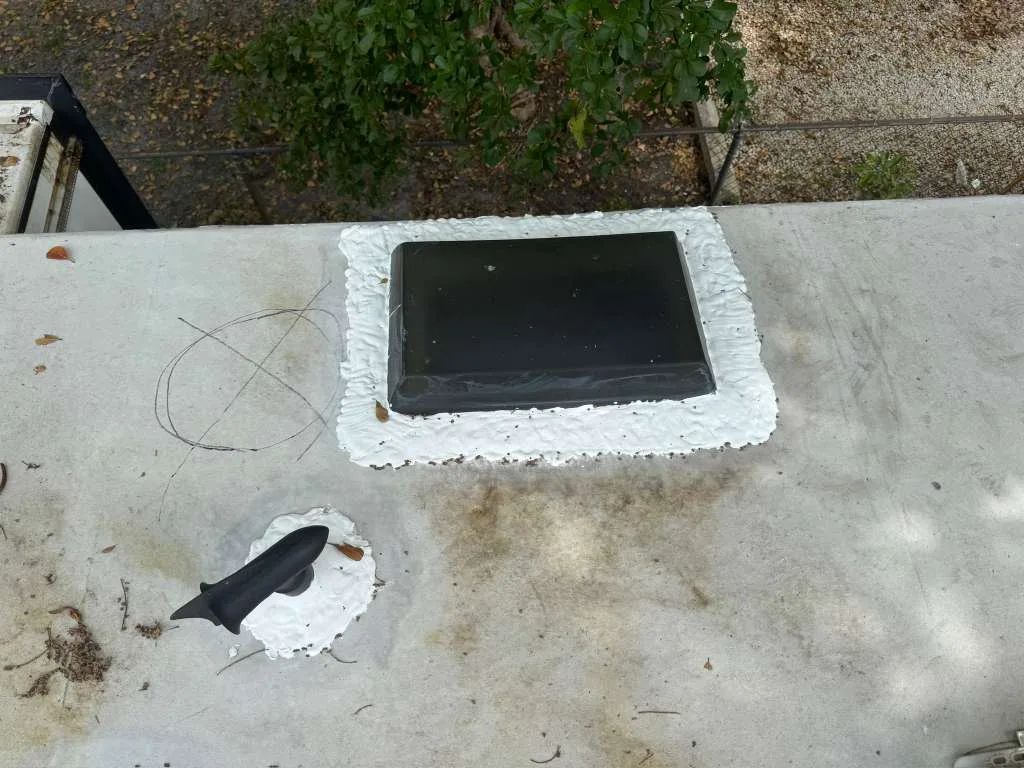
Bubbling membrane, failed adhesive bonds, separated seams on your rubber roof. We patch, re-adhere, and replace EPDM and TPO membranes on-site. Patches start at $125.
EPDM and TPO are the two most common membrane materials used on RV roofs. EPDM (ethylene propylene diene monomer) is a synthetic rubber that's been the industry standard for decades. It's flexible, UV-resistant, and affordable. TPO (thermoplastic polyolefin) is a newer membrane that's gaining ground, especially on higher-end rigs. It offers better heat reflection and uses heat-welded seams instead of adhesive.
Repair work on these materials includes patching punctures and tears, re-adhering sections where the glue bond has failed, fixing separated seams, and replacing membrane sections that are too far gone to patch. The critical thing is using the right products for each material. EPDM and TPO are chemically different and require different adhesives, primers, and patching techniques. Using EPDM products on a TPO roof (or the reverse) will result in a repair that fails quickly.
In Palm City's climate, both materials face accelerated stress. According to the Buildings.com roofing resource, single-ply membranes in hot, humid climates experience faster degradation from UV exposure and thermal cycling. The good news is that both EPDM and TPO are highly repairable when you catch problems early. A $200 patch now prevents a $2,000 membrane replacement later.
EPDM and TPO roof repair covers patching, adhesive repair, seam work, and membrane replacement on rubber RV roofs. Small patches run $125-250, larger section repairs cost $275-550, and membrane replacement starts at $800-2,000. Matching the right repair products to your specific membrane type is essential for a lasting fix.
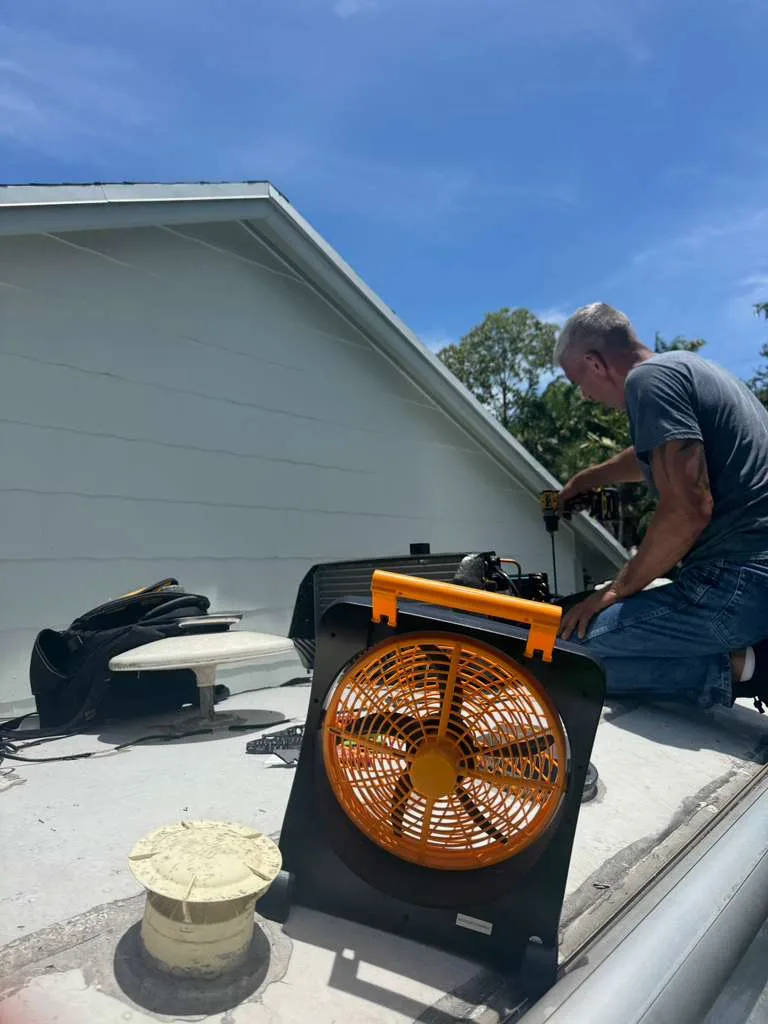
We confirm whether your roof is EPDM or TPO. This determines every product and technique we use. Using the wrong material compatibility causes repair failure.
We check for punctures, adhesive failure, seam separation, and substrate damage underneath. A moisture meter helps identify trapped water that isn't visible from the surface.
The damaged area gets cleaned and primed. For EPDM, we apply contact adhesive and patch material. For TPO, we use heat welding or compatible adhesive systems depending on the repair type.
Patch edges get sealed, seams get rolled for full contact, and we water-test the repair. For larger jobs, we check with a moisture meter 24 hours later to verify no moisture is getting through.
| Service | Price Range |
|---|---|
| Small Patch (puncture, small tear) | $125 - $250 |
| Large Section Repair (seam failure, adhesive repair) | $275 - $550 |
| Membrane Replacement (significant area) | $800 - $2,000 |
| Seam Re-welding (TPO) / Re-adhesion (EPDM) | $150 - $350 |
Price depends on membrane type, damage area, and substrate condition. Firm quote after inspection.
Membrane problems often develop slowly, but these signs indicate it's time for professional attention:
A small patch repair runs $125-250 for a localized area. Larger section repairs cost $275-550. If a significant portion of the membrane needs replacement, that ranges from $800-2,000 depending on the area covered and how much prep work is involved. We quote everything after inspecting the roof so there aren't any surprises.
EPDM (ethylene propylene diene monomer) is a black or white rubber membrane that's been the standard on RVs for decades. It's flexible, durable, and relatively easy to repair. TPO (thermoplastic polyolefin) is a newer, white membrane material that's heat-welded at the seams instead of glued. TPO reflects more heat and is gaining popularity, especially on newer rigs. The repair approach differs because EPDM uses adhesive-based patches while TPO requires heat welding for proper seam repair.
The easiest way is to check your owner's manual or the sticker on the inside of a cabinet door that lists your RV specs. Visually, EPDM typically has a matte, slightly textured surface and feels like thick rubber. TPO has a smoother, slightly glossy finish and feels stiffer. If there's any doubt, we can identify it on sight and make sure the right repair products are used.
Yes, that's how most repairs are done. EPDM patches incredibly well when the right adhesive and material are used. We cut a patch from matching EPDM material, apply bonding adhesive to both surfaces, and roll the patch into place. A properly done patch becomes a permanent part of the roof. Full replacement is only needed when the membrane has deteriorated across a large area or the substrate underneath is damaged.
Bubbling usually means the adhesive bond between the membrane and the plywood substrate has failed in that area. This happens when moisture gets trapped underneath the membrane, or when the original adhesive breaks down from heat exposure. In Palm City's summer heat, roof surfaces can hit 150+ degrees, which accelerates adhesive failure. Small bubbles can sometimes be re-adhered, but larger ones may need the membrane to be cut back, re-glued, and sealed.
A well-maintained EPDM roof typically lasts 12-20 years, even in Florida. TPO has a similar lifespan but with better heat reflection. The key word is maintained. That means regular sealant application, annual inspection, keeping the surface clean, and addressing any issues quickly. Neglected rubber roofs in Florida's sun can start failing in as few as 7-8 years.
It depends on your situation. TPO reflects more heat, which matters a lot in Florida, and the heat-welded seams are arguably more reliable than EPDM's adhesive seams. But TPO costs more and requires different repair techniques going forward. If you're doing a full replacement anyway and plan to keep the RV long-term, TPO is worth considering. For partial repairs, it makes more sense to stick with whatever material is already up there.
Membrane problems get worse fast in Florida's heat. We'll inspect your EPDM or TPO roof and give you a firm price before starting any repair work.
Call 772-271-5270