Leaky fittings, dead water pumps, cold showers, backed-up tanks. We've dealt with every plumbing problem an RV can throw at you. We come to your location with the parts and tools to get water flowing right again.
Your RV carries its own water supply, uses a pressurized pump instead of city pressure, and routes everything through flexible PEX lines that bounce down the highway at 65 mph. The fittings are smaller. The pipes are thinner. And every joint takes vibration stress that a house never experiences.
That's why RV plumbing leaks are so common, and why they need someone who actually understands these systems. We've been fixing RV plumbing across Martin County for over 14 years, working on everything from vintage travel trailers with copper lines to brand-new Class A coaches running PEX throughout. We know where leaks hide and how to fix them so they stay fixed.
Florida's heat adds another challenge. Plastic fittings expand and contract more in 95-degree summers, and the minerals in Florida water accelerate corrosion inside valves and water heater tanks. We see these patterns constantly and know how to address them.
From phone call to finished repair, here's what to expect.
Call or message us. Leaking under the sink? No hot water? Pump running non-stop? Describe what's happening and we'll come prepared with the right parts.
We pressurize the system and check every accessible fitting, valve, and connection. For hidden leaks, we use moisture meters to find water behind walls and under floors.
You get an exact number for the repair before we start. Parts, labor, everything. No hourly billing, no surprises at the end. You decide whether to proceed.
We make the repair, run the system at full pressure, and check every connection. We don't leave until the system holds and everything flows the way it should.
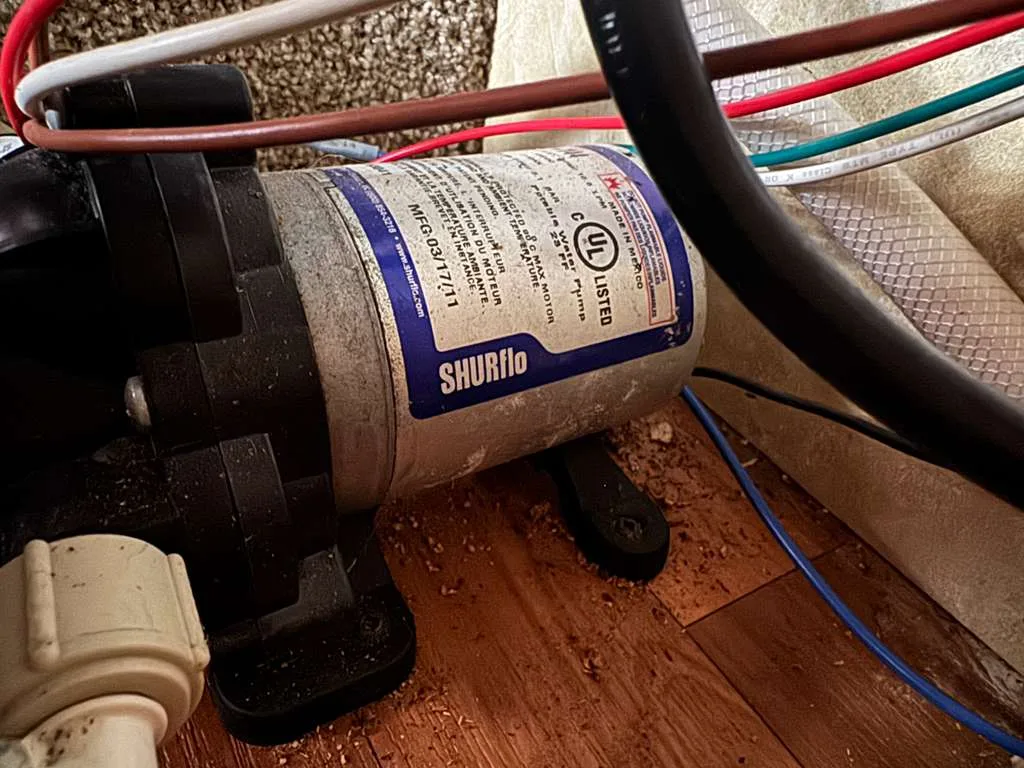
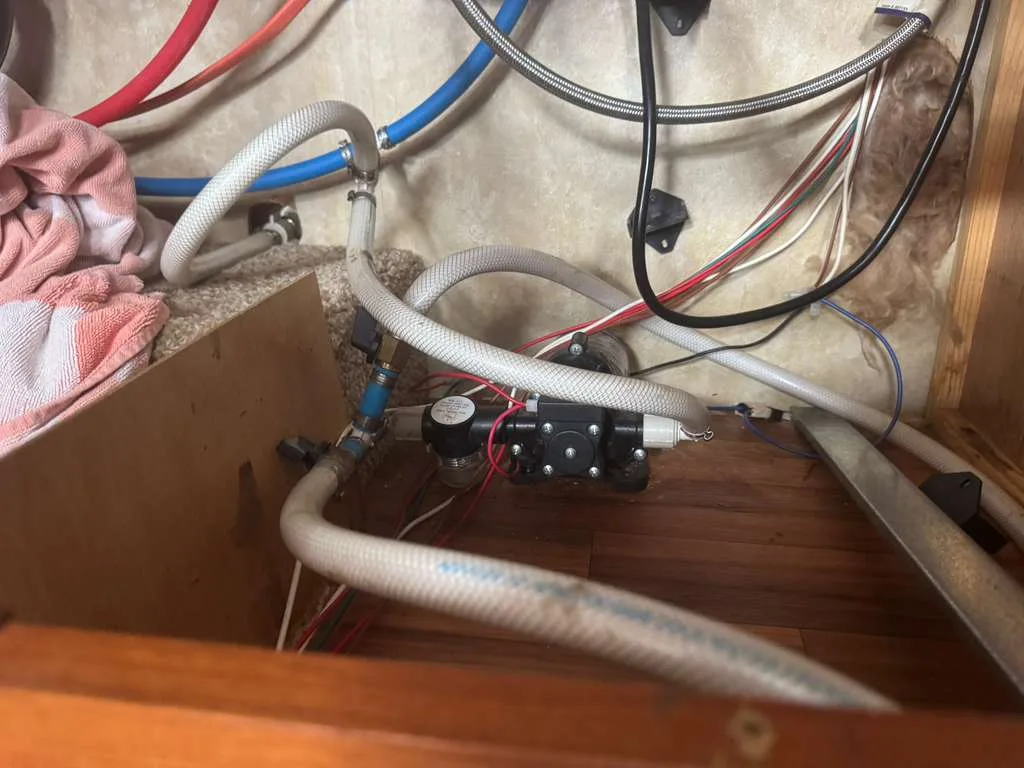
Water pump issues top the list. When your pump cycles on and off by itself, even with all faucets closed, it means pressure is leaking somewhere. Sometimes it's a cracked fitting under the bathroom sink that drips just enough to drop the pressure. Other times, it's a failing check valve inside the pump itself. Either way, a pump that runs constantly will burn out fast. We pressure-test the entire system to isolate the leak within minutes, not hours.
Water heater failures are a close second. The most common symptom is lukewarm or cold water after the heater's been running for 20+ minutes. In electric water heaters, the heating element corrodes from sediment buildup. In propane units, the burner tube gets clogged with spiders and debris. Suburban and Atwood are the two brands we see most, and we carry common parts for both. A heating element swap runs $120-225. A full water heater replacement costs $400-1,200 depending on the unit and whether you're upgrading to tankless.
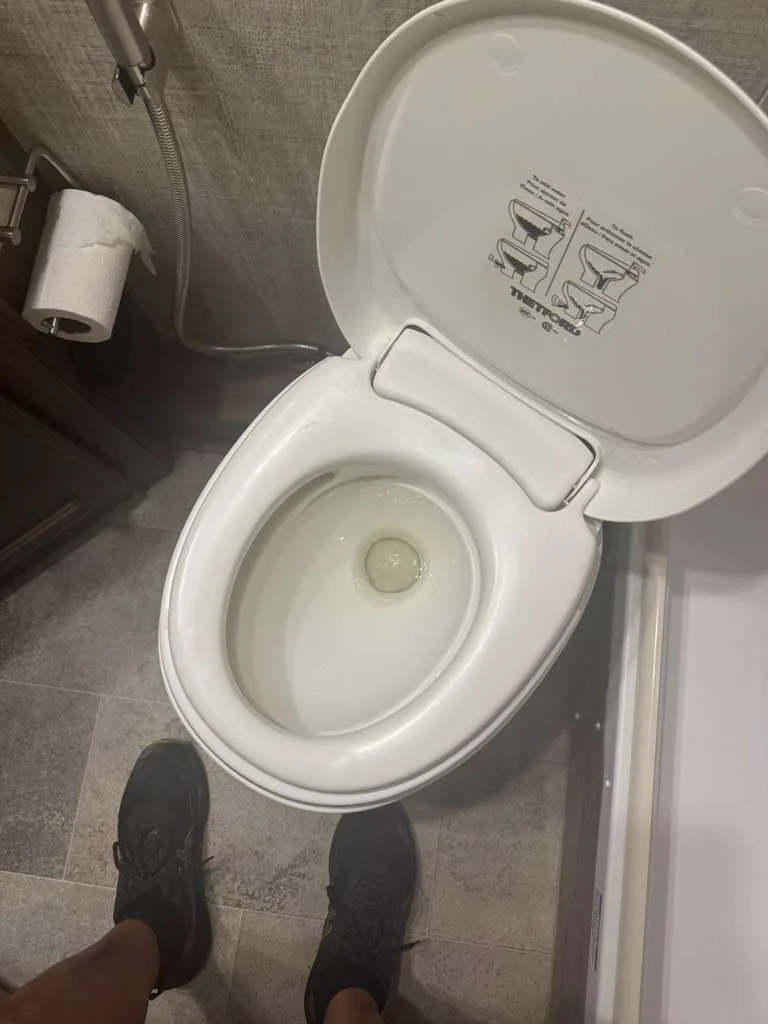
Toilet problems come in third. The most common complaint is water that won't stay in the bowl, which means the seal is gone. Every RV toilet has a rubber seal, either a ball valve or a blade seal, at the bottom of the bowl. After a few years, especially in Florida's heat, that rubber hardens, cracks, and stops sealing. The fix takes about 45 minutes and costs $65-120 for a seal replacement. If the whole toilet needs replacing, a new Thetford or Dometic unit installed runs $250-450.
Hidden leaks behind walls are the most expensive problem to ignore. A slow drip at a PEX fitting inside a wall can go undetected for weeks. By the time you smell mold or notice a soft spot on the floor, you're looking at water damage on top of the plumbing repair. We use moisture detection equipment to find leaks without tearing your walls apart first.
Six focused areas covering your RV's complete water and waste system.
Element replacement, thermostat repair, anode rod service, tank flushing, propane burner cleaning, and full unit replacement. We work on Suburban, Atwood, and Girard models, plus tankless upgrades.
Learn morePump diagnosis, replacement, pressure adjustment, check valve repair, and accumulator tank installation. We stock SHURflo and other common pump models for same-day replacement.
Learn morePressure testing, moisture meter scanning, fitting inspection, and hidden leak tracing behind walls and under floors. We find the source, not just the symptoms, and repair it on the spot.
Learn moreSeal replacement, valve rebuilds, pedal mechanism repair, flange repair, and full toilet replacement. We handle Thetford, Dometic, and composting toilet systems.
Learn moreTank valve replacement, sensor cleaning, gate valve rebuild, tank flushing, vent pipe clearing, and macerator pump installation. Keeping your gray and black water systems working properly.
Learn moreFitting replacement, pipe rerouting, manifold repair, freeze damage restoration, and full re-piping for older coaches. PEX is our standard for all replacement work.
Learn more
A slow plumbing leak doesn't stay a small problem for long. Water finds its way into subfloor layers, insulation, and wall cavities. Within a week in Florida's humidity, you've got mold growing in places you can't see. Within a month, the subfloor starts delaminating. We've seen $150 plumbing repairs turn into $3,000+ water damage restoration jobs because someone waited.
The worst offenders are leaks behind the shower wall and under the water heater compartment. Both areas stay hidden until the damage is substantial. If your RV smells musty, the floor feels soft anywhere, or you see water stains on interior panels, call us before it gets worse. A pressure test and moisture scan takes about 30 minutes and tells you exactly where you stand.
We also recommend checking your plumbing fittings at least once a year, especially after any long road trip. The vibration from highway driving loosens crimp fittings and stresses glued joints. A 5-minute visual check after a trip can catch a problem before it becomes a disaster.
| Service | Typical Price Range |
|---|---|
| Plumbing Diagnostic | $85 - $125 |
| Faucet Replacement | $95 - $225 |
| Water Pump Replacement | $175 - $350 |
| Water Heater Element/Thermostat | $120 - $225 |
| Water Heater Replacement | $400 - $1,200 |
| Toilet Seal Replacement | $65 - $120 |
| Full Toilet Replacement | $250 - $450 |
| Leak Detection & Repair | $125 - $400 |
| Holding Tank Valve Replacement | $95 - $275 |
| PEX Re-piping (per section) | $150 - $500 |
| Full System Re-pipe | $600 - $2,200 |
Prices depend on RV size, parts needed, and accessibility. You'll always receive an exact quote before any work begins.
A plumbing diagnostic starts at $85-125. Simple fixes like tightening a fitting or replacing a faucet aerator cost $75-150. Water pump replacement runs $175-350 depending on the pump model. Water heater repair ranges from $150-450, while full replacement costs $400-1,200. Major jobs like holding tank replacement or full re-piping run $600-2,200.
A pump that cycles without anyone using water means you've got a leak somewhere in the system. The pump builds pressure, the leak slowly drops it, and the pressure switch kicks the pump back on. Check under sinks, around the water heater, and at every fitting you can see. Even a tiny drip at a PEX connection will cause this. We pressure-test the whole system to find it fast.
Yes, and it's one of our more popular upgrades. Tankless water heaters give you unlimited hot water without storing 6-10 gallons. They're lighter and take up less space. The trade-off is they cost more upfront, usually $600-1,200 installed. If you camp for extended periods or have more than two people showering regularly, a tankless unit pays for itself in convenience.
The seal at the bottom of the bowl has worn out or dried up. This is extremely common, especially in RVs that sit unused for a while. The rubber ball seal or blade seal hardens, cracks, and stops holding water. Replacement seals cost $15-40 for the part, and the whole job takes about 45 minutes. We carry the most common seal kits in our truck.
The water pump cycling on its own is the biggest giveaway. Other signs include soft or spongy spots on the floor, musty smells that won't go away, water stains on walls or ceilings, and your fresh water tank draining faster than it should. In Florida's humidity, mold can start growing within 48 hours of a leak starting. We use pressure testing and moisture meters to find leaks behind walls.
PEX is the better choice for RVs, and it's what nearly every manufacturer uses now. It's flexible, handles vibration from road travel without cracking, resists freeze damage better than copper, and costs less. Copper is rigid and can develop fatigue cracks at joints from all the bouncing. We use PEX for all replacements unless there's a specific reason to match existing copper.
This is one of the most common RV complaints. The sensors inside the tank get coated with waste and toilet paper residue, giving false readings. We can clean the tank thoroughly and sometimes restore sensor accuracy. If the sensors are truly shot, we install external ultrasonic sensors that read through the tank wall and never touch the contents. Those run about $150-250 installed.
At least once a year, but every six months is better if you're in an area with hard water. Martin County's water has moderate mineral content. Sediment builds up on the bottom of the tank and around the heating element, reducing efficiency and eventually causing the element to burn out early. Flushing takes about 30 minutes and we also inspect the anode rod while we're at it.
Absolutely. Even in Florida, we get cold snaps that can crack pipes and damage water heaters. Winterization involves draining all water lines and tanks, bypassing the water heater, and pumping non-toxic antifreeze through every line and fixture. The whole process takes about an hour. De-winterization in spring takes about the same and includes sanitizing the fresh water system.
Every day a leak goes unfixed, the damage grows. We'll come to your location, find the problem, and give you an honest price. No obligation.
Call 772-271-5270